

Bird Ringing Camp
Blog by Aindrila Sarkar https://wildindiatravels.com/
Scientific studies of birds often require that birds be captured to gather morphometric data and to collect samples for pathological, genetic, and biogeochemical analysis. These data and samples can be used to understand evolutionary relationships, genetics, population structure and dynamics, comparative anatomy and physiology, adaption, behavior, parasites and diseases, geographic distributions, migration, and the general ecology of wild populations of birds.
I have attended BNHS Bird Ringing Camp which was held in Mumbai, Maharastra on December 2018. In this blog I am going to tell you the stories of bird ringing camp and it’s insightful stories.
Bird ringing camp –The First Day

Our camp started at 2.30 PM. The meeting point was CBD Belapur railway station. We went to NRI Pond by bus arranged by BNHS for bird counting and bird ringing. We went through a practical session of bird capturing through mist net and ringing. We got two different species. One is oriental magpie robin and another is white-throated kingfisher. Eminent ringer Tuhina ma’am along with Madhumita ma’am ringed both the birds in the presence of all the ringing camp students and BNHS faculties and representatives.
Here is the bird species list found on first day along with the counting –
Common Name | Scientific Name | Count |
|---|---|---|
Marsh Sandpiper | Tringa stagnatilis | 12 |
Brahminy Kite | Haliastur indus | 1 |
Wire-tailed Swallow | Hirundo smithii | 1 |
Lesser Flamingo | Phoeniconaias minor | 140 |
Scaly-breasted Munia | Lonchura punctulata | 4 |
Little Egret | Egretta garzetta | 14 |
Gray Heron | Ardea cinerea | 4 |
Eurasian Coot | Fulica atra | 2 |
Little Stint | Calidris minuta | 60 |
Pied Avocet | Recurvirostra avosetta | 30 |
Rock Pigeon | Columba livia (Feral Pigeon) | 70 |
Black Kite | Milvus migrans | 1 |
Little Swift | Apus affinis | 14 |
Curlew Sandpiper | Calidris ferruginea | 1 |
Eurasian Marsh-Harrier | Circus aeruginosus | 1 |
White-throated Kingfisher | Halcyon smyrnensis | 1 |
Common Snipe | Gallinago gallinago | 1 |
Green-winged Teal | Anas crecca | 3 |
Indian Pond-Heron | Ardeola grayii | 4 |
Osprey | Pandion haliaetus | 1 |
Cattle Egret | Bubulcus ibis | 4 |
Asian Koel | Eudynamys scolopaceus | 2 |
Red-vented Bulbul | Pycnonotus cafer | 4 |
Painted Stork | Mycteria leucocephala | 55 |
Northern Shoveler | Spatula clypeata | 5 |
Striated Heron | Butorides striata | 1 |
Common Redshank | Tringa totanus | 2 |
Indian Spot-billed Duck | Anas poecilorhyncha | 6 |
Common Myna | Acridotheres tristis | 4 |
Ashy Prinia | Prinia socialis | 2 |
Blue-tailed Bee-eater | Merops philippinus | 2 |
Brown-headed Gull | Chroicocephalus brunnicephalus | 120 |
Black-headed Ibis | Threskiornis melanocephalus | 1 |
Ruddy-breasted Crake | Zapornia fusca | 1 |
Large-billed Crow | Corvus macrorhynchos | 10 |
Spotted Owlet | Athene brama | 1 |
Purple Heron | Ardea purpurea | 2 |
Red-wattled Lapwing | Vanellus indicus | 16 |
Greater Flamingo | Phoenicopterus roseus | 10 |
Intermediate Egret | Ardea intermedia | 4 |
House Crow | Corvus splendens | 15 |
Shikra | Accipiter badius | 1 |
Plain Prinia | Prinia inornata | 1 |
Red-whiskered Bulbul | Pycnonotus jocosus | 1 |
Wood Sandpiper | Tringa glareola | 20 |
Northern Pintail | Anas acuta | 22 |
Common Sandpiper | Actitis hypoleucos | 40 |
Green Bee-eater | Merops orientalis | 4 |
Common Kingfisher | Alcedo atthis | 3 |
Great Egret | Ardea alba | 4 |
Asian Pied Starling | Gracupica contra | 40 |
Little Cormorant | Microcarbo niger | 6 |
Eurasian Spoonbill | Platalea leucorodia | 14 |
Black-winged Stilt | Himantopus himantopus | 28 |

Slender-billed Gull
Bird Ringing Camp – The Second Day
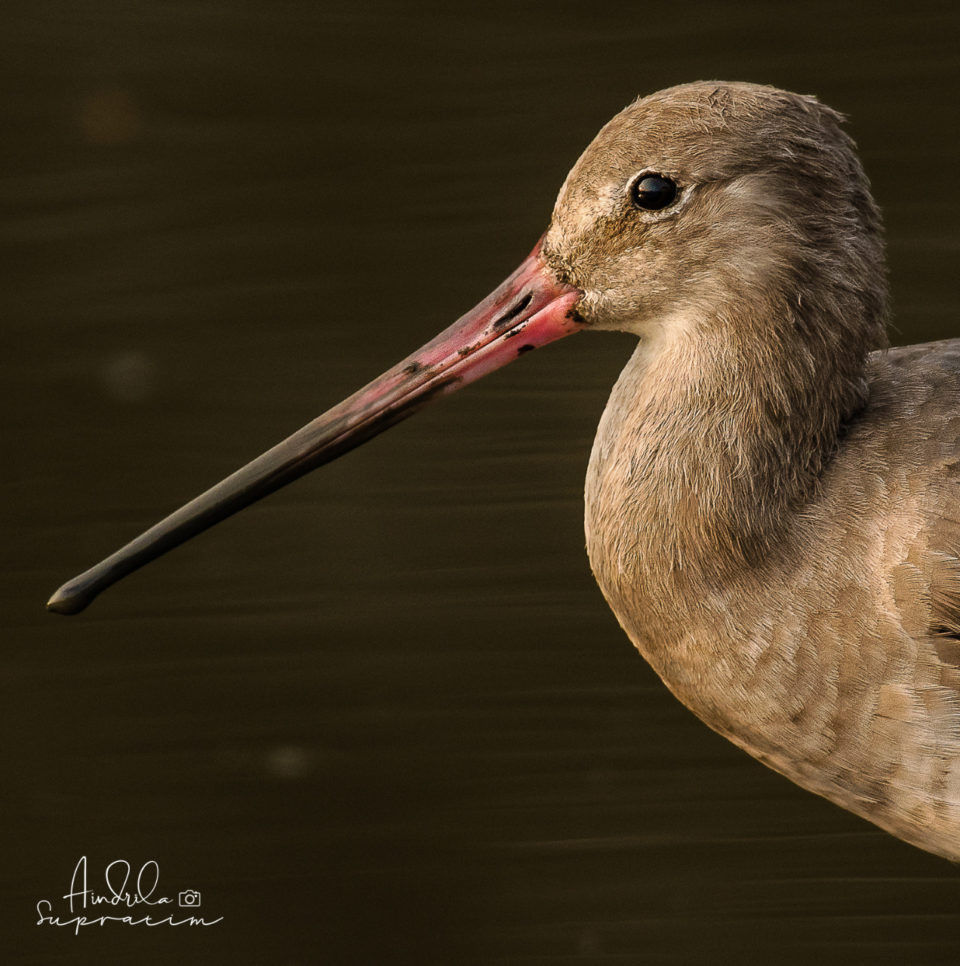
Black-tailed Godwit
Our camp started at 7.00 AM. We went to Coastal & Marine Biodiversity Centre, Airoli for bird ringing. We went through a practical session of bird capturing through mist net and ringing. We learnt how to set up a mist nest for capturing birds. Today we got a Blyth’s reed warbler for ringing. We took a stroll in the entire arena of biodiversity centre and observed many birds like lesser and greater flamingos, black-tailed godwit, common sandpiper, little stint etc. near Thane creek.
Here is the bird species list found on second day along with the counting –
Common Name | Scientific Name | Count |
|---|---|---|
Little Swift | Apus affinis | 4 |
Common Myna | Acridotheres tristis | 6 |
Marsh Sandpiper | Tringa stagnatilis | 3 |
Long-tailed Shrike | Lanius schach | 1 |
Asian Koel | Eudynamys scolopaceus | 2 |
Indian Pond-Heron | Ardeola grayii | 4 |
Greater Flamingo | Phoenicopterus roseus | 10 |
Gull-billed Tern | Gelochelidon nilotica | 4 |
Black Kite (Black-eared) | Milvus migrans lineatus/formosanus | 1 |
Great Egret | Ardea alba | 1 |
Black-winged Stilt | Himantopus himantopus | 10 |
Little Cormorant | Microcarbo niger | 1 |
Green-winged Teal | Anas crecca | 2 |
Common Iora | Aegithina tiphia | 1 |
Barn Swallow | Hirundo rustica | 1 |
Little Egret | Egretta garzetta | 6 |
Red-breasted Flycatcher | Ficedula parva | 2 |
Common Sandpiper | Actitis hypoleucos | 6 |
House Crow | Corvus splendens | 6 |
Common Greenshank | Tringa nebularia | 1 |
Indian Robin | Copsychus fulicatus | 4 |
Asian Pied Starling | Gracupica contra | 4 |
Intermediate Egret | Ardea intermedia | 2 |
Black-tailed Godwit | Limosa limosa | 18 |
Lesser Flamingo | Phoeniconaias minor | 60 |
Blyth’s Reed Warbler | Acrocephalus dumetorum | 3 |
Common Redshank | Tringa totanus | 4 |
Rock Pigeon (Feral Pigeon) | Columba livia | 15 |
Rose-ringed Parakeet | Psittacula krameri | 4 |
Brahminy Kite | Haliastur indus | 2 |
Large-billed Crow (Indian Jungle) | Corvus macrorhynchos culminatus | 12 |
Black Kite | Milvus migrans | 1 |
Shikra | Accipiter badius | 1 |
Gray Heron | Ardea cinerea | 1 |
Paddyfield Warbler | Acrocephalus agricola | 2 |
Dusky Crag-Martin | Ptyonoprogne concolor | 4 |
Wood Sandpiper | Tringa glareola | 2 |
Asian Brown Flycatcher | Muscicapa dauurica | 2 |
Red-wattled Lapwing | Vanellus indicus | 2 |
Black-headed Gull | Chroicocephalus ridibundus | 20 |
After bird watching through binoculars, spotting scope and photographing them, we were enriched by an interactive session of the presentations on bird migration and bird ringing by Tuhina Katty ma’am and Madhumita Panigrahi ma’am. We came to know many important things from these presentations. I will discuss those in later part. In the second half after lunch, we went to Bhandup pumping station for bird watching. It was a nice experience to walk in the jungle trail and reach to the waterbody where we found a big flock of flamingos and terns flying over our head. We watched Indian Spot-billed Duck, common sandpiper and marsh harrier from a short distance.

Here is the bird species list found on Bhandup pumping station -
Common Name | Scientific Name | Count |
|---|---|---|
Baya Weaver | Ploceus philippinus | 51 |
Little Cormorant | Microcarbo niger | 2 |
Purple Sunbird | Cinnyris asiaticus | 2 |
Little Stint | Calidris minuta | 2 |
Common Kingfisher | Alcedo atthis | 2 |
Intermediate Egret | Ardea intermedia | 3 |
Red-vented Bulbul | Pycnonotus cafer | 5 |
Wood Sandpiper | Tringa glareola | 8 |
Marsh Sandpiper | Tringa stagnatilis | 1 |
Black-winged Stilt | Himantopus himantopus | 4 |
Indian Golden Oriole | Oriolus kundoo | 1 |
Brahminy Kite | Haliastur indus | 1 |
Green Bee-eater | Merops orientalis | 4 |
Rose-ringed Parakeet | Psittacula krameri | 4 |
Greater Flamingo | Phoenicopterus roseus | 40 |
White-throated Kingfisher | Halcyon smyrnensis | 2 |
Whiskered Tern | Chlidonias hybrida | 23 |
Gray Heron | Ardea cinerea | 2 |
Eurasian Marsh-Harrier | Circus aeruginosus | 1 |
White-breasted Waterhen | Amaurornis phoenicurus | 2 |
Indian Spot-billed Duck | Anas poecilorhyncha | 12 |
Garganey | Spatula querquedula | 8 |
Bay-backed Shrike | Lanius vittatus | 1 |
Asian Palm-Swift | Cypsiurus balasiensis | 2 |
Rock Pigeon (Feral Pigeon) | Columba livia | 40 |
Indian Pond-Heron | Ardeola grayii | 2 |
Blyth’s Reed Warbler | Acrocephalus dumetorum | 1 |
Red-whiskered Bulbul | Pycnonotus jocosus | 12 |
Ashy Prinia | Prinia socialis | 5 |
Brown-headed Gull | Chroicocephalus brunnicephalus | 14 |
Black-headed Gull | Chroicocephalus ridibundus | 6 |
Common Myna | Acridotheres tristis | 7 |
Asian Koel | Eudynamys scolopaceus | 2 |
Black Drongo | Dicrurus macrocercus | 1 |
Lesser Flamingo | Phoeniconaias minor | 324 |
Black-headed Ibis | Threskiornis melanocephalus | 14 |
Eurasian Spoonbill | Platalea leucorodia | 2 |
Scaly-breasted Munia | Lonchura punctulata | 6 |
Black Kite | Milvus migrans | 3 |
Coppersmith Barbet | Psilopogon haemacephalus | 2 |
Great Egret | Ardea alba | 1 |
Pied Avocet | Recurvirostra avosetta | 14 |
Brahminy Starling | Sturnia pagodarum | 2 |
Laughing Dove | Streptopelia senegalensis | 2 |
Little Egret | Egretta garzetta | 3 |
Red-wattled Lapwing | Vanellus indicus | 1 |
House Crow | Corvus splendens | 10 |
Cattle Egret | Bubulcus ibis | 10 |
Eurasian Coot | Fulica atra | 6 |
Little Swift | Apus affinis | 8 |
Common Sandpiper | Actitis hypoleucos | 1 |
Dusky Crag-Martin | Ptyonoprogne concolor | 6 |
Plain Prinia | Prinia inornata | 1 |
Large-billed Crow (Indian Jungle) | Corvus macrorhynchos culminatus | 8 |
River Tern | Sterna aurantia | 1 |

Lesser Flamingo
Bird Ringing Camp –The Third Day
We went to Uran for learning bird counting in line transect method. From 7 AM. to 11 AM. we enjoyed watching birds, photographing, learning line transact method, counting species. Today we got a lot of waterbirds along with flamingos from a shorter distance. We got a total five-ringed bird also from which three are photographed well.
After an awesome lunch offered by BNHS, officially our camp was completed. We got news from our faculty Dr. Raju Kasambe sir that Caspian plover was sighted in Kolshet Road, Thane, Maharashtra. It is not commonly sighted in this region. We, students, went there and found some other species but not got that exact species
Here is the bird species list found on third day along with the counting –
Common Name | Scientific Name | Count |
|---|---|---|
Rock Pigeon (Feral Pigeon) | Columba livia | 45 |
Laughing Dove | Streptopelia senegalensis | 2 |
Asian Koel | Eudynamys scolopaceus | 1 |
Little Swift | Apus affinis | 12 |
Black-winged Stilt | Himantopus himantopus | 10 |
Pied Avocet | Recurvirostra avosetta | 2 |
Red-wattled Lapwing | Vanellus indicus | 2 |
Lesser Sand-Plover | Charadrius mongolus | 4 |
Kentish Plover | Charadrius alexandrinus | 2 |
Little Ringed Plover | Charadrius dubius | 2 |
Black-tailed Godwit | Limosa limosa | 1 |
Common Sandpiper | Actitis hypoleucos | 1 |
Common Greenshank | Tringa nebularia | 2 |
Wood Sandpiper | Tringa glareola | 4 |
Common Redshank | Tringa totanus | 2 |
Brown-headed Gull | Chroicocephalus brunnicephalus | 4 |
Whiskered Tern | Chlidonias hybrida | 4 |
Little Cormorant | Microcarbo niger | 3 |
Gray Heron | Ardea cinerea | 3 |
Intermediate Egret | Ardea intermedia | 2 |
Little Egret | Egretta garzetta | 6 |
Cattle Egret | Bubulcus ibis | 2 |
Indian Pond-Heron | Ardeola grayii | 6 |
Pond-Heron sp. | Ardeola sp. | 1 |
Black-headed Ibis | Threskiornis melanocephalus | 2 |
Osprey | Pandion haliaetus | 1 |
Black Kite | Milvus migrans | 6 |
Brahminy Kite | Haliastur indus | 1 |
Common Kingfisher | Alcedo atthis | 1 |
Green Bee-eater | Merops orientalis | 2 |
Coppersmith Barbet | Psilopogon haemacephalus | 2 |
House Crow | Corvus splendens | 20 |
Large-billed Crow (Indian Jungle) | Corvus macrorhynchos culminatus | 4 |
Dusky Crag-Martin | Ptyonoprogne concolor | 2 |
Brahminy Starling | Sturnia pagodarum | 2 |
Common Myna | Acridotheres tristis | 4 |
Bird sp. | Aves sp. | 1 |

Indian Skimmers
Bird Ringing Basics
Information gathered during the different activities of Ringing Workshop
We came to know about bird ringing and flagging in details.

The bird ringing itself was so very interesting. Trapping a bird through mist net and handling it with gentle care and proficiency is very important. We observed how our ringer Tuhina Ma’am gently handled the bird. She didn’t hold it very tightly or very softly so that it can feel at ease. She did biometric measurement while doing the ringing and telling the students how to do it.
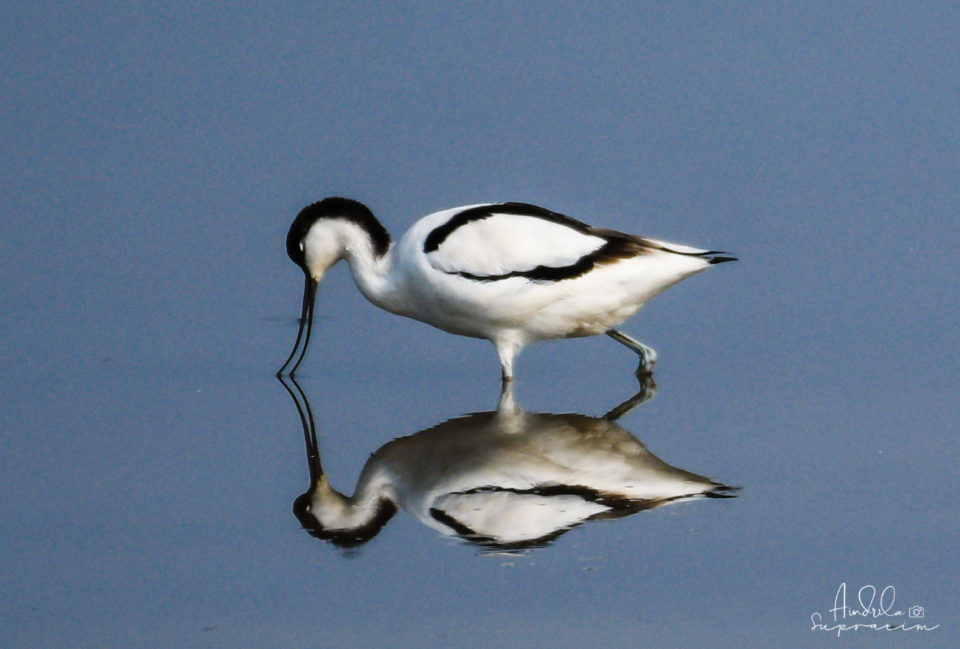
Pied Avocet
Here is the whole process of ringing step by step
1) The ringing team at first do the setup of the mist net in different locations where they observe the maximum bird activity. This net is made of one type of soft nylon. It is very soft and not at all harmful to the caught birds. The ringing team take a stroll around the place and check in every 15 minutes if there is any bird caught in net or not.

Pied Avocet
2) After trapping the bird it is rescued and brought to the ringing location in a soft breathable cotton bag. There are different bags for different sizes of birds. We have to write the ring number and the scientific name of the species. If the sex of the bird can be identified from its outer look then it can be written. If the bird is going through a moulting stage then it can be written by the predefined key numbers of the data sheet given by BNHS. In the same style, we have to measure its wing, bill, tars, tail and write in the data sheet. We also have to mention the weight, locality, and habitat of the birds caught and ringed.
For measuring a small scale is used. This is how to do the measurement –

Ringing details sheet
1) Tars – Joint to the third scale of the feet.
2) Bill – From the skull joint to the extreme last point of the bill.
3) Wing – From covert to the primary feather.
4) Tail – Uropygial gland to the longest feather of the tail.
Reasons to do biometric measurement of birds

Ringing details sheet keypoints
To get the average size and location we do biometric measurements. Some species size also differs from another specimen of the same species. The health and well being of the captured bird is the most important thing during the whole ringing process.
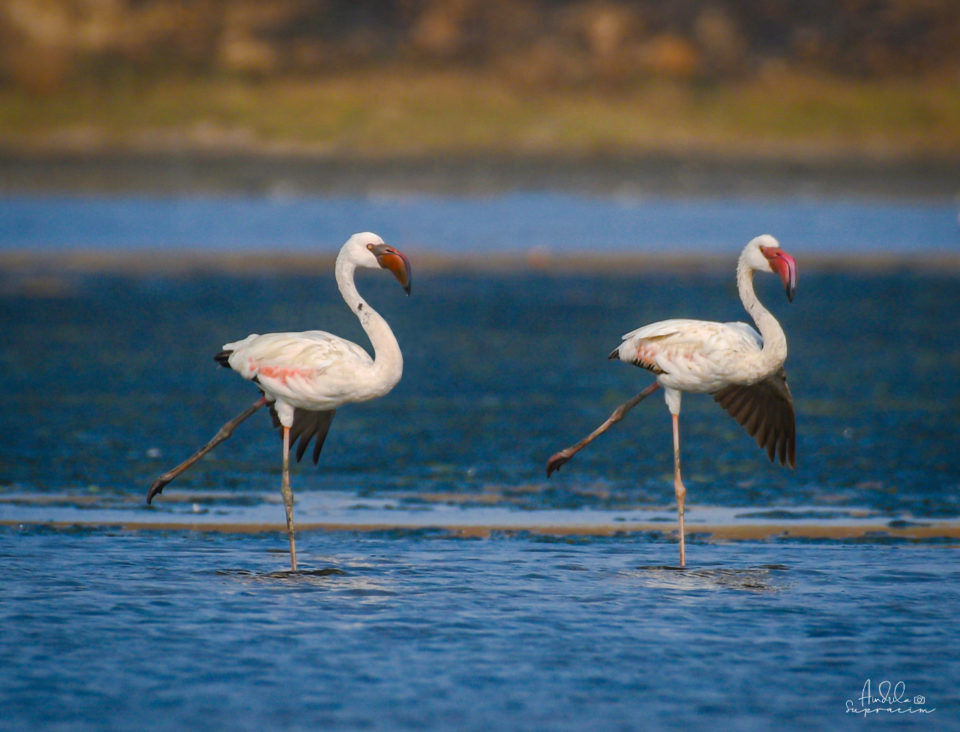
Lesser flamingos in synchronized action
In Uran, I photographed three birds that have flags in their legs. If we want to monitor the seasonal changes in birds then we have to recapture the ringed bird and get the ring number. Then we have to inform the authority for it’s more details and they will search their old records for the details of that particular bird. Flagging allows the photographers to take the shot of the bird and get the flag number. It is easier for getting the old data without the hassal of recapturing.
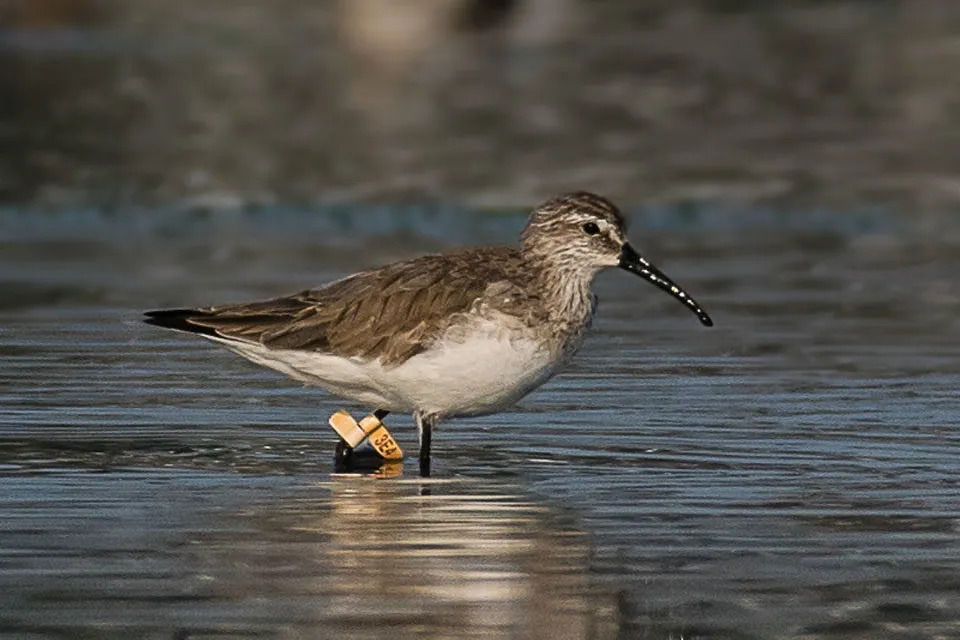
Flagged curlew sandpiper in Uran, Navi Mumbai
Learning
Bird migration is a very important thing in the world of birding and ornithology. Bird ringing and flagging are two pillars for understanding migration history and pattern.
Bird migration study techniques
-
Bird ringing
-
Colour marking
-
Geolocator
-
Satellite Transmitter
-
GSM Tags
-
Stable Isotopes
-
Radar Studies
History of Migration

Flamingos in flight
Migration in India means regular seasonal journeys undertaken by many species of India. Migration happened even 3000 years ago. We got the proof in Greek Philosopher and poet Hesiod, Homer, Herodotus and Aristotle’s writing. In early 19th’s century, the scientific studies have begun.
All the reasons for migration are not fully understood or discovered by science, but generally, it is said that birds migrate to avoid the adverse situation of the winter season and the scarcity of food of his breeding ground in the winter. There are hazards during migration like flying to cover such a huge distance, lack of ideal habitat to stopover, poaching, hunting etc. But the advantages of migration must be more than the hazards, that is why birds do migrate.
Fuel for the journey
-
Migration begins only if the fat content exceeds a critical level.
-
Migrants develop stores of fat especially for migration
-
Fat yields two times more energy and water per gram metabolized than does either carbohydrate or protein.
-
Precision in timing to avoid overlap of breeding, moult, and migration.
Long distance migration

Slender-billed Gulls
-
Bar-tailed godwits have the longest known non-stop flight of any migrant, flying 11,000 km from Alaska to their New Zealand non-breeding areas. Prior to migration 55% of their body weight is stored fat to fuel this uninterrupted journey.
-
Seabird migration is similar to the pattern to those of the waders and waterfowl, most terns are breeding in the temperate northern hemisphere, move varying distances south in winter.
-
Arctic tern has the longest distance migration of any bird.
-
Research using tracking devices attached to the birds was published in January 2010 and showed that they are in fact not unusual for the species, 11 arctic terns that bred in Greenland or Iceland each covered 70,900 km. on average in a year.
Flyways

Image source : Flyways
A flyway is a flight path used in bird migration. Flyways generally span over continents and often oceans. India is under three major flyways, those are –
-
Central Asian Flyway
-
West Asian-East African Flyway
-
East Asian – Australasian Flyway
Lorem ipsum dolor sit amet, consectetur adipiscing elit, sed do eiusmod tempor incididunt ut labore et dolore magna aliqua.
Observation along with personal views
In birding, there is a term called LIFER . This camp is my first camp with BNHS and I think I can use the term lifer for this camp itself. This is a great learning experience laden with some very enriching interactive session overall. I did many birding trip personally but have never been a part of such a fantastic educational birding trip before. I would like to thank all the faculties, education officers, coordinators and all the batchmates.
If you have found any flagged bird, kindly drop a mail at bands@bnhs.org or with the details of your observation.
